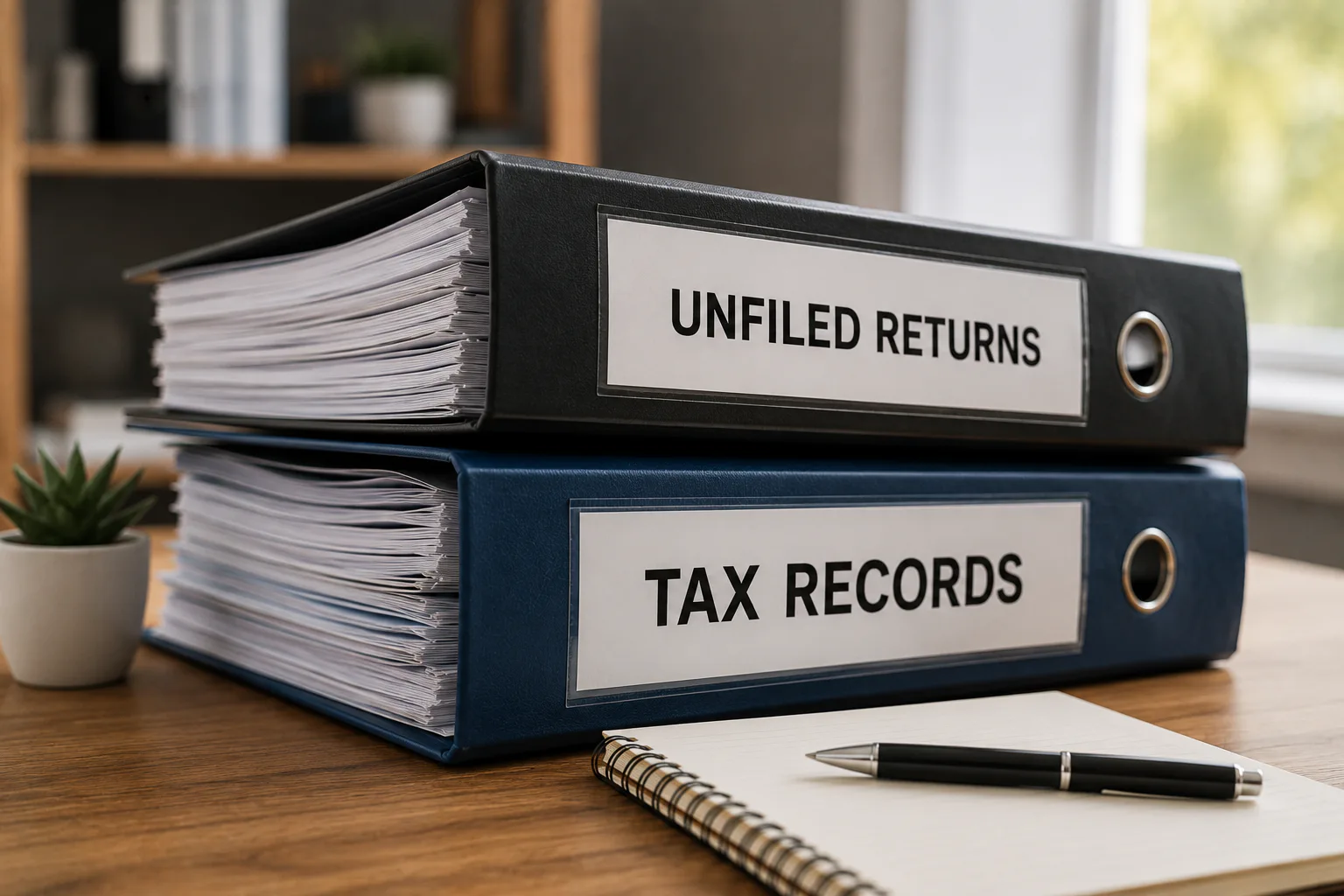
Advanta Tax Consulting helps taxpayers file unfiled tax returns so they can get back in good standing with the IRS. Missing one tax return can turn into a bigger problem fast. People fall behind for all kinds of reasons — a job change, a business problem, a divorce, a health issue, missing documents, or a fear of owing more than they can pay. The reason matters, but the next step matters more.
Unfiled Tax Returns Create Compliance Problems
Unfiled tax returns create compliance problems because the IRS expects taxpayers to file required returns on time.
When returns are missing, several things can happen.
The IRS may send notices. Penalties may grow. Refunds may be lost. Tax debt may increase. Collection action may become more likely. If you need a payment plan or other IRS resolution option, missing returns can block the process.
That last part surprises people.
A taxpayer may call the IRS and ask for a payment plan. The IRS may say no until all required returns are filed. This is because the IRS usually wants the taxpayer back in compliance before approving a long-term arrangement.
So the first question is simple.
Which returns are missing?
Once we know that, we can start building the plan.
Prior-Year Tax Returns Need Accurate Records
Prior-year tax returns need accurate records because old filings still need to match income, deductions, credits, and business activity.
For a wage earner, that may mean W-2s, 1099s, mortgage interest statements, dependent information, education forms, and other tax documents.
For a self-employed person or business owner, the work can be more detailed.
You may need:
- Bank statements
- Income records
- 1099 forms
- Credit card statements
- Expense receipts
- Payroll reports
- Mileage records
- Loan statements
- Asset purchase records
- Prior tax returns
- Bookkeeping reports
Many people do not have everything neatly saved. That is normal. The goal is to reconstruct the records as accurately as possible.
The IRS may have wage and income transcripts that show reported income. Those records can help. But they do not always show expenses, deductions, or the full tax picture.
That is why simply using IRS income records without reviewing deductions can create a higher balance than needed.
Substitute Returns Can Cost Taxpayers More

Substitute returns can cost taxpayers more because the IRS may prepare a return using income records without adding all deductions and credits.
This is sometimes called a substitute for return.
When the IRS creates this type of return, it may calculate tax based on information reported to the government. But it may not include business expenses, dependents, filing status details, credits, or other items that could lower the tax.
That can make the balance look worse than it should.
Filing the correct prior-year return may replace the substitute return and create a more accurate result. Sometimes the balance goes down. Sometimes penalties and interest still apply. But the taxpayer gets a better foundation for resolving the issue.
The key is accuracy.
You do not want to guess. You do not want to file sloppy returns just to get them done. You want the returns prepared with care because they shape what happens next.
IRS Penalties Grow When Returns Stay Unfiled
IRS penalties grow when returns stay unfiled, especially when tax is owed.
There can be failure-to-file penalties. There can be failure-to-pay penalties. Interest may continue to build. The longer the issue sits, the more expensive it can become.
That is one reason people should not wait until the IRS gets aggressive.
Even if you cannot pay the full balance, filing the return may still be the right first step. It shows movement toward compliance. It gives the IRS a real number. It also opens the door to payment plans or other resolution options.
Many people avoid filing because they cannot pay.
That is understandable, but it can backfire.
Filing and paying are two different issues. You may still have options for the balance after the return is filed.
Refunds Can Be Lost on Old Tax Returns
Refunds can be lost on old tax returns when taxpayers wait too long to file.
Some people assume every old return means they owe. That is not always true. A taxpayer may have been due a refund for a prior year. But the IRS has deadlines for claiming refunds.
When the deadline passes, that money may be gone.
This is another reason to review missing returns instead of avoiding them. You may owe for some years and be due a refund for others. You may need to file several returns to understand the full picture.
A clean review gives you the facts.
Facts beat fear every time.
Business Owners Face Bigger Problems With Missing Returns
Business owners face bigger problems with missing returns because business income, expenses, payroll, bookkeeping, and sales tax can all connect.
A small business owner may miss one return because the books are behind. Then the next year becomes harder. Bank records pile up. Receipts disappear. Payroll reports get hard to track. Sales tax reports may also become an issue for Texas businesses.
This is where tax prep and bookkeeping need to work together.
A business tax return is only as strong as the records behind it. If the books are wrong, the tax return may be wrong too. That can create more problems later.
Clean bookkeeping helps answer key questions:
- How much income did the business earn?
- Which expenses were ordinary and necessary?
- Were owners paid correctly?
- Were assets purchased?
- Was sales tax collected?
- Were payroll taxes handled?
- Were loans or transfers recorded correctly?
When those answers are clear, tax filing gets much easier.
Tax Compliance Helps You Move Forward
Tax compliance helps you move forward because it gives you a clean starting point.
Once missing returns are filed, you can look at the total balance. Then you can decide what to do next. That may include paying the balance, setting up an installment agreement, asking for penalty relief, or reviewing other IRS resolution options.
The exact answer depends on the case.
But without filed returns, everything stays stuck.
Compliance also matters for life and business needs. You may need filed returns for a mortgage, business loan, immigration matter, financial aid, divorce case, or business sale. Missing returns can slow down major decisions.
Getting current gives you better options.
How We Help With Unfiled Tax Returns
How we help with unfiled tax returns starts with figuring out what is missing and what records are available.
We do not assume. We review.
The process often includes:
- Identifying missing tax years
- Reviewing IRS notices
- Gathering income records
- Reconstructing deductions when possible
- Preparing prior-year tax returns
- Filing the returns
- Reviewing any tax balance
- Discussing payment or resolution options
- Helping the taxpayer stay compliant going forward
For individuals, the process may be fairly simple. For self-employed taxpayers and business owners, it may require deeper record cleanup.
Either way, the goal is the same.
Get accurate returns filed. Find out where things stand. Build a realistic plan.
What To Gather Before Asking for Help
What to gather before asking for help depends on your tax situation, but a few items are useful for most people.
Bring any IRS letters you have received. Gather copies of old tax returns if you have them. Pull W-2s, 1099s, business income records, bank statements, mortgage documents, and dependent information.
If you own a business, gather bookkeeping files, profit and loss reports, payroll records, sales tax reports, bank statements, and business expense details.
Do not worry if you do not have every document.
That is common with older tax years. A tax professional can help identify what is missing and what may be available through IRS records or other sources.
The Best Time To File Missing Returns Is Now
The best time to file missing returns is now because delay usually makes the problem harder.
Waiting rarely improves a tax problem. Notices continue. Penalties may grow. Records get harder to find. Stress builds.
Taking action does not mean everything gets fixed in one day. It means the problem finally has direction.
For many taxpayers, that first step brings relief.
You move from “I do not know what to do” to “I know what needs to happen next.”
That shift matters.
Frequently Asked Questions
Yes, many taxpayers file multiple prior-year returns as part of getting back into compliance.
There may be ways to request income information or reconstruct records. A tax professional can help identify what is available.
Often, yes. Filing missing returns is commonly required before many IRS payment or resolution options can move forward.
It depends on the numbers. Filing gives you the accurate balance, which is needed before a real plan can be made.
Yes. We help taxpayers prepare and file prior-year tax returns and review the next steps for any balance owed.
Takeaway
Unfiled tax returns can create stress, penalties, and IRS compliance problems. Advanta Tax Consulting helps taxpayers file missing returns, clean up the record, and move toward a real solution.